
Sorry this came late this week, I was out all day yesterday at the Hudson Valley Nut Fest, with a menu of chestnut, acorn, and black walnut goodies. If you’re sorry you missed it, come by my Enchanted Forest Bake Sale next Saturday!
Much of my newsletter is free, but the recipe below is just for paid subscribers. If you want to become one yourself and support my work, click here:

Chestnut and buckwheat are one of my favorite combinations, nutty and sweet and full of flavor all by themselves. They both challenge our conception of what a grain is: chestnuts earning the descriptor “grains that grow on trees” due to their high carb/low fat makeup, and buckwheat being a “pseudocereal” (which means that it’s not a grass like wheat or rice, but another plant in the same family as rhubarb). Both are gluten-free and behave in similar ways in baked goods, which is perhaps why when I searched the Internet for this combination, most of the results were about how to substitute one flour for the other. I love them together though, for the way that their intensity of flavor plays off each other.
The chestnut flour I’m using comes from Breadtree Farms, an agroforestry project in the Upper Hudson Valley. (They’re still sourcing chestnuts from Route 9 Cooperative until their trees get more productive.) It comes in a coarse and fine grind, which you can think of similar to cornmeal/polenta. I like to use the coarse grind for texture in my burnt miso cake or chestnut focaccia, but the finer stuff mixes more evenly into other flours and creates a creamier, smoother texture that’s better suited to muffins or crepes or the waffles below. My buckwheat flour is from The Birkett Mills in Pennsylvania, which sources its buckwheat from Northeastern farms, including the Finger Lakes region in NY.
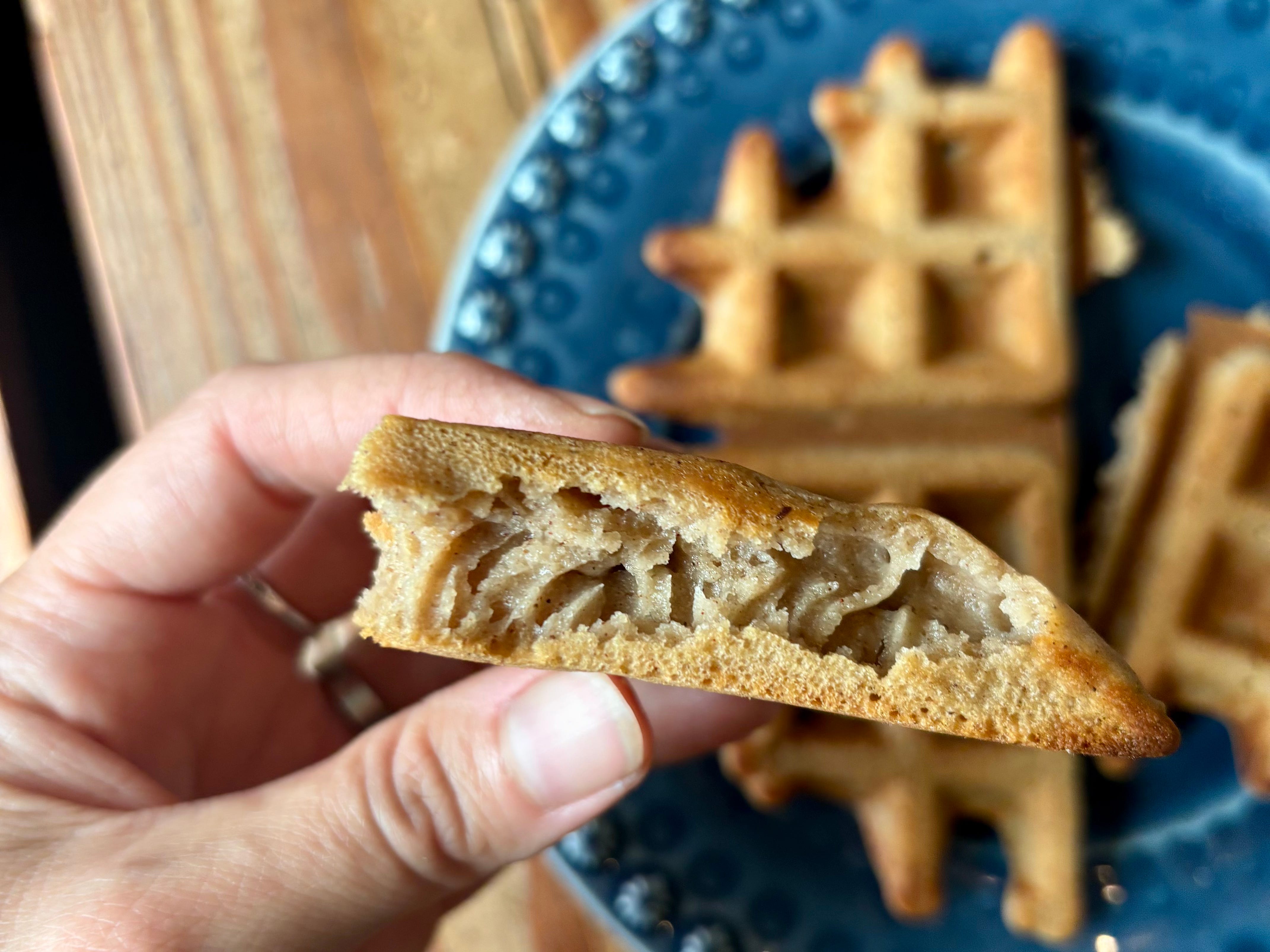
I came up with this waffle recipe as a cooking demonstration for a chestnut festival I took part in last month. It was so easy that I knew I’d be able to talk while mixing the ingredients together, and I wouldn’t need any fancy equipment other than a waffle maker. I cooked the waffles while taking questions and then passed around steaming pieces with a squeeze bottle full of my favorite sweet breakfast condiment: almond butter, maple syrup, and a touch of sea salt. It was perfect for the sunny fall morning, but I think will hit really well deep in winter, when you need something substantial that will keep you full. These are not light and fluffy, but dense like Belgian waffles. They stand up well to a number of toppings, from the almond butter spread to something savory like labne and rosemary or roasted mushrooms.
Chestnut flour is high in fiber — even higher than oats — and particularly in resistant starch, a form of prebiotic fiber that feeds good bacteria in the gut biome. It helps you feel full and prevents blood sugar spikes, so eating a waffle made from chestnut and buckwheat (which is also high in fiber) lands very differently from an Eggo. I love to make a big batch of waffles and freeze them to toast for breakfasts or lunchboxes.